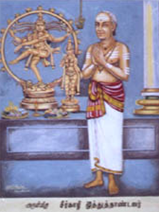
Showing posts with label அம்பலவாணர். Show all posts

Saturday, November 12, 2016

Thamizh Songs in Carnatic Music—29---ஆடிக்கொண்டார் அந்த வேடிக்கை--ADikkoNDAr anda vEDikkai


Thamizh Songs in Carnatic Music—29

ஆடிக்கொண்டார் அந்த வேடிக்கை--ADikkoNDAr anda vEDikkai

Composer: Muttut tANDavar

rAgam: mAyAmALavagauLai    tALam: Adi


A thousand eyes to witness the delightful dance …..


Composition:  ADikkoNDAr anda vEDikkai…..
Composer:     muttut tANDavar
mudrA:           none
(signature):   
rAgam:  mAyAmALava gauLai (15th mELam) or mOhanam ( janyam of                                                   harikAmbhOji, 28th mELam) 
tALam:           Adi, Eka
ArOhaNam:   SR1G3M1PD1N3S  (SR2G3PD2 S for mOhanam)
avarOhaNam: SN3D1PM1G3R1S  (SD2PG3R2S for mOhanam)


பல்லவி:            
ஆடிக்கொண்டார் அந்த வேடிக்கைக் காணக்
        கண் ஆயிரம் வேண்டாமோ

அனுபல்லவி:   
 நாடித் துதிப்பவர் பங்கில் உறைபவர் நம்பர்  
        திருச்செம்பொன்  அம்பலவாணர்                                    (ஆடிக்கொண்டார்)

சரணம்1:    
பங்கய சிலம்பைந்தாடப் பாதச்
           சதங்கைகள் கிண்கிண்ணென்றாட
பொங்கமுடனே உரித்து உடுத்த புலித்தோல் அசைந்தாட
செங்கையில் ஏந்திய மான் மழுவாட
              செம்பொற்க்கழற் கண் முயலகனாட
 கங்கை இளம் பிறை செஞ்சடையாடக்
               கனக சபை தனிலே                                      (ஆடிக்கொண்டார்)

சரணம்2:     
ஆர நவமணி மாலைகளாட ஆடும் அரவம் படம் விரித்தாட
சீரணிக் கொன்றை மலர்த் தொடையாடச் சிதம்பரத்தேர் ஆட
பேரணி வேதியர் தில்லை மூவாயிரம் பேர்களும் பூஜித்துக் கொண்டு நின்றாட
காரணி  காளி எதிர்த்து   நின்றாடக் கனக சபை தனிலே                                                                                                                                                 (ஆடிக்கொண்டார்)

சரணம்3:    
ந்ரித்த கணபதி வேலர் நின்றாட நின்றயன் மாலுடன் இந்திரன் ஆட
முப்பத்து முக்கோடி தேவருடனே முனிவரும் நின்றாட
மெய்ப்பதி மேவும் பதஞ்சலி ஆட வ்யாக்ர பாதரும் நந்தியுமாட
ஒப்பற்ற சிவகாமி அம்மையும் கூடவே நின்றாட      (ஆடிக்கொண்டார்

Lyrcis in Roman script

Pallavi:            ADikkoNDAr anda vEDikkaik kANak kaN Ayiram vENDAmO

Anupallavi:    nADit tudippavar pangil uRaibavar nambar
                        tiruccempon  ambalavANar                                    (ADikkoNDAr)

CaraNam1:     pangaya silambaindADap pAdac
                              cadangaigaL kiNkiNNenRADa
                        pongamuDanE urittu uDutta pulittOl asaindADa
                        sengaiyil Endiya mAn mazhuvADa
                               sempoRkkazhaRk kaN muyalaganADa
                        gangai iLam piRai senjcaDaiyADak
                               kanaka sabhai tanilE                                      (ADikkoNDAr)

CaraNam2:     Ara navamaNi mAlaigaLADa ADum aravam paDam virittADa
                        sIraNik konRai malart toDaiyADac cidambarattEr ADa
                        pEraNi vEdiyar tillai mUvAyiram pergaLum pUjittuk koNDu ninRADa
             kAraNi  kALi etirttu ninRAdak kanaka sabhai tanilE                                                                                                                                                 (ADikkoNDAr)

CaraNam3:     nritta gaNapati vElar ninRADa ninRayan mAluDan indran ADa
                        muppattu mukkOTi dEvaruDanE munivarum ninRADa
                        meippati mEvum patanjali ADa vyAgra pAdarum nandiyumADa
                        oppaTRa sivakAmiammaiyum kUDavE ninRADa            (ADikkoNDAr)                            
                                                                                                                                   
Lyrics:           
The lyrics have been assembled from http://www.karnatik.com/c2440.shtml  and  Amutham CD (booklet) WS006. We tried to rectify some transcriptional errors in the lyrics. In the absence of authentic text available to us, this version may still contain some errors. The assistance of Rajani Shankar of Malaysia in clarifying certain terms is appreciated.


Meaning:

Pallavi:           He is dancing delightfully.  Don’t we need a thousand                                               
                        eyes to witness such a spectacle?

Anupallavi:    He supports those who worship Him. He is the Lord of the                                                                       sacred golden hall (in Cidambaram).

CaraNam1:     The five anklets are shaking and the string of bells (cadangai) makes a                                                    tinkling sound. The tiger hide stripped and worn around His waist is                          dancing! The   deer and the axe borne in the hands are dancing! The                                                      demon (muyalagan) is also dancing at His golden feet! The maiden GangA and the                                crescent moon on the locks of hair are also dancing when the Lord dances in  the                                  golden hall.

CaraNam2:     The plentiful nine-stone (navaratnam) necklaces are dancing! The snake                          around His neck is spreading its hood and dancing! The resplendent                                                        flower (konRai) garland hanging down is also dancing! The temple chariot is dancing!                            kALi is also dancing! The three thousand  priests of Cidambaram pray and dance!                                 Thus the Lord dances at the golden hall!

CaraNam3:     Ganapati and Murugan are dancing! Brahma (ayan), Vishnu (mAl), and                          Indran (chief of staff in the celestial world) dance! With innumerable                                                        celestials, the sages also dance! The truly devoted Patanjali dances! The                                                sage vyAgrapAdA and the sacred bull (nandi) also dance! The                                                                incomparable dEvi Sivakami dances together with Lord Siva.
                       
General Comments:
This song delves deep into the details of the cosmic dance of Lord Siva in its entire splendor. The composer goes into rapture at the sight of the cosmic dance. To him every thing around Nataraja dances in unison with Him.  The composer imagines that even the inanimate objects such as the anklets, the tiger hide, the axe, the necklaces, and  the flower garland, in addition to the snake, the priests, the celestials and the Lord’s consort  dance as though they are inseparable.

For a person who did not have any training in music, to write such compositions (which are tuned to beautiful rAgam and rhythm) is truly amazing.  It is common knowledge that the cosmic dance of Nataraja at Cidambaram has grabbed the attention of several composers, both ancient and modern. The mythological references to Patanjali and VyAgrapAda indicate that it is truly a one-of-a-kind event in religious folklore.

Once again, the song has references to various episodes of gallantry of Lord Siva and the celestial activities. It is a theme handled by MarimuttA PiLLai too.

Composer’s Bio:
Muththuth Thandavar (1560-1640??) was born in SIrkhazhi near Cidambaram in a family of instrumental musicians who served the temples.  They were known as isai vELALar---those who cultivate music. The child was named tANDavan after the deity at Cidambaram.

As a youngster, tANDavan suffered an incurable wasting disease which caused havoc on his health and appearance. He was not able to follow the family profession on account of this debilitating condition. He was also shunned by everybody. He used to visit a temple maid (dEvadAsi?), SivabhAgyam, to hear her sing and dance. This isolated him and aggravated his already pitiful condition and he was left to fend for himself.

It appears that he got inspiration by listening to the devotional songs sung by SivabhAgyam.  . His foray into composing began as an accident. One day he was locked up in the SIrkhazhi temple room containing the vehicles used to carry the gods on festive days. He cried but to no avail. After a while the daughter of the temple priest appeared before him with a bowl of food. She told him to go to Cidambaram and sing a song everyday in praise of the Lord. While tANDavan protested that he knew nothing about singing or composing, the little girl asked him to use the words of the devotees who enter the temple. It was all the doing of dEvi (goddess). The next morning the “ugly” tANDavan looked radiant, thereby earning the nickname “muttut tANDavan”.

There was no looking back for him ever. He went to Cidambaram. On the first day he heard some words “bhoolOka kailAya giri…”. He used those words and sang right off at the sanctum. His illness was cured. He continued the daily ritual of singing in the temple grabbing the stray words of the devotees.  After a while he didn’t need the lead words.  He kept on composing and singing. His life was one of miracle on a personal level and a gift to humanity in the form of devotional songs. He was a pioneer in composing padams. teruvil vArAnO (khamAs rAgam) is a classic and  a delight for dancers and audience alike.

Muththuth Thandavar (MT), Arunacala Kavi (AK), and Marimutta Pillai (MMP) are celebrated  as members of the Thamizh trinity (Thamizh mUvar) in recognition of their contributions to Thamizh music.
            
Very few of MT’s compositions have survived the test of time.  TiruppAmburam SwAminatha PiLLai collected sixty of them and tuned them to different rAgams under the sponsorship of ANNAmalai University. Twenty five padams of MT are also available. Some of his compositions that are sung in music concerts are: arumarundonRu tani marundidu (mOhanam or kAmbhOji), pEsAdE nenjamE (tODi), kANAmal vINilE (dhanyAsi or kAmbhOji, or nIlAmbari), teruvil vArAnO (khamAs), unai nambinEn ayyA (kIravANi),  IsanE kOTi sUrya prakAsanE (naLinakAnti), darisittaLavil (latAngi), sEvikka vENDumayyA (AndOLikA), innum oru taram (simmEndra madyamam), and ambara cidambaram, & innum oru stalam (suraTi).

Some audio and video links

Listen to Sudha Ragunathan here
Charulata Mani sings here 

Listen to Vidya Kalyanaramamn here

Listen to Unnikrishnan here

Listen/view K Bharath Sundar here

For a dance by young dancers here

SEshampaTTi Sivalingam on nAdaswaram here https://www.mediafire.com/?ho9gcpebw2pm14p


Reference:


Saturday, September 10, 2016

Thamizh Songs in Carnatic Music—21-- tandai tAy irundAl … தந்தை தாய் இருந்தால்

Thamizh Songs in Carnatic Music—21
  tandai tAy irundAl தந்தை தாய் இருந்தால்

rAgam: Shanmugapriya     tALam: Adi


Composer: K. Ponnaiah Pillai


Note: The authorship of this song is in dispute. Some places mention it is by Ponnaiah PiLlai (PP). Others say it is by Gopalakrishna Bharathi (GKB). The two versions given are slightly different in wording and also there are additional verses in the version by GKB. For what it is worth both versions are given here. For the full text version by GKB please scroll to the end..

Authorship attributed to Ponnaiah PiLLai at this site  http://tamil.thehindu.com/society/spirituality/article5921356.ece

This one says it is GKB

If only you have a father and a mother….

Composition:  tandai tAy irundAl ulagattil
Composer:     K. ponnaiyA piLLai
mudrA:           none
(signature):   
rAgam:           shanmukhapriyA (56th mELam)    
tALam:           Adi
ArOhaNam:   SR2G2M2PD1N2 S
avarOhaNam: SN2D1PM2G2R2S


பல்லவி
தந்தை தாய் இருந்தால் உலகத்தில் உமக்கிந்த 
தாழ்வெல்லாம் வருமோ அய்யா  பெற்ற              (தந்தை தாய்) 


அனுபல்லவி
அந்தமிகுந்த ஸ்ரீ அம்பலவாணரே   அருமையுடனே பெற்று                 
பெருமையுடன் வளர்த்த                                              (தந்தை தாய்) 

சரணம்

கல்லால் ஒருவன் அடிக்க உடல் சிலிர்க்க 
       காலில் செருப்பால் ஒரு வேடன் வந்தே உதைக்க 
வில்லால் ஒருவன் அடிக்க காண்டீபம் என்னும் 
        வில்லால் ஒருவன் அடிக்க 
கூசாமல் ஒருவன் கை கோடாலியால் வெட்ட
        கூட்டத்தில் ஒருவன் பித்தா பேயா என திட்ட 
வீசி மதுரை மாறன் பிரம்பால் அடிக்க   
      அந்த வேளை யாரை நினைந்தீரோ அய்யா பெற்ற  (தந்தை தாய்)

Lyrics in Roman script

Pallavi:           tandai tAy irundAl ulagattil umakkinda
                        tAzhvellAm varumO ayyA peRRa                 (tandai)

Anupallavi:    anda migunda sri ambala vANarE arumaiyuDanE
                        peTRu perumaiyuDanE vaLartta                               (tandai)

CaraNam:       kallAl oruvan aDikka uDal silirkka kAlin seruppAl
                                    oru vEDan vandE udaikka
                        villAl oruvan aDikka --gANDIpa mennum
                                   villAl oruvan aDikka
                        kUsAmal oruvan kai kODAliyAl veTTa
                                   kUTTattil oruvan pittA pEyA enat tiTTa
                       vIsi Madurai mARan pirambAl aDikka
                               anda vELai yArai ninaindIrO ayyA                      (tandai)
           

Meaning:
Pallavi:           If only you had a father and a mother, you would not suffer all the indignities in this world!
           
Anupallavi:    In this vast universe, if only you had your parents who conceived you with such a rarity and reared you with pride, you would not have to face the hardships you are facing.
           
CaraNam:       One fellow hit you with a stone, another stepped on you with his footwear. One other person hit you with an arrow from his bow, another one cut you with an ax. In a crowd one abused you with epithets such as “madman and ghost”. The Pandya king (Madurai MARan) caned you. On such occasions whom did you think of, oh Lord?


General Comments:
This song can be characterized as conforming to the figure of speech known as “vanjcap pugazhcci aNi” in Thamizh and “nindAstuti” in Sanskrit. The point driven is positive but a negative approach is taken. Some poets resort to this mode, especially when dealing with divinity or well-heeled philanthropists. A familiar poem attributed to KALamEgap pulavar comes to mind.

வாதக்காலாம் தமக்கு மைத்துனருக்கு நீரிழிவாம் 
போதப் பெருவயிறாம் புத்திரர்க்கு -- மாதரையில்
வந்தவினை தீர்க் வகையறியான் வேளூரான் 
எந்தவினை தீர்த்தான் இவன்?


            vAdakkAlAm tamakku maittunarkku nIrizhivAm
            bOdap peruvayiRAm puttirarkku--mAdaraiyil
            vandavinai  tIrkka  vagaiyaRiyAn  vELUrAn
            endavinai  tIrttAn  ivan?

The poem mentioned above was written in praise of the presiding deity at Vaideeswaran koil who is believed to cure all ills of the devotees who pray at the temple. The veiled praise is obvious as the reference is to the family of Lord Siva. Lord Siva Himself is referred to as being afflicted with foot pain (reference to his dancing feet), Vishnu (brother-in-law) is on the water-bed always, and Ganapati (son) has a bloated belly, altogether a family afflicted with many ailments (!!). When He cannot cure his own family’s illness, how can He cure the ills of His devotees?

The song in discussion closely parallels the theme mentioned above. Lord Siva was worshipped by so many noted devotees each in their own style.  Ponnaiah Pillai makes reference to stories from various episodes including the popular TiruviLaiyADal.  He narrates the incidents from the purANAs. There was this SAkkiya NAyanAr, who not being satisfied with being a Buddhist, adored Lord Siva. Apparently he threw a stone at the Lord inadvertently during meditation at the sanctum, which the Lord accepted as a form of worship. It became a daily worship practice for the nAyanAr. The Lord was obviously pleased. The bow and arrow insult refers to Arjuna ( of Mahabharata) when he was seeking the pAsupatAstram from the Lord in order to win over his rivals.

There is also a reference to Kannappa nayanar who offered both of his eyes to the Lord upon seeing bleeding from the Lord’s eyes. The hunter had to keep his foot at the second eye of the Lord for locational identity in order to remove his own second eye to replace the Lord’s. Sundaramurthy nayanar sang the Lord’s praise, “pittA piRai sUDi perumAnE aruLALA…”. The reference in the song to caning the Lord by the Pandya king is taken from TiruviLaiyADal purANam wherein the Lord wanted to help an old lady carry out her obligation of carrying sand to block the floods in Madurai in exchange for pittu, a sweet snack. The king caned Him for resting and not doing His duty (without realizing his misdeed).

Ponnaiah Pillai refers to all these revered incidents and makes light of the situations by using the vanjacap pugazhcci aNi. He is telling the Lord that He would not have had to undergo such “mistreatments” if only He had parents. Nice concoction!

This song was first popularized by the late N. C. Vasantagokilam (one of the most under-recognized musicians of yesteryears).

Composer’s Bio:
K. Ponnaiah Pillai (1888-1945) hailed from the famous ThanjAvUr quartet family. He was the grandson of the Ponnaiah  of the Thanjavur Quartet (Chinnaiah, Ponnaiah, Shivanandam, and VaDivElu). He learned music, dance, and mridangam from his illustrious uncle Pandanainallur Meenakshisundaram Pillai. Later on he joined his father, Kannusamy Pillai, and taught music and dance to several disciples. He became a music professor in the Music College in Chidambaram and taught vocal music and mirdangam to students.

Ponnaiah Pillai also served the Music Board of the University of Madras and the Music Academy at Madras creditably.  His songs were published in a compendium titled  “Rajah Annamalai Tamil Isaik Karuvoolam”.


Some of Ponnaiah Pillai’s compositions that are heard often in the dance and music concerts and commercial recordings are: ranganAtuDE (saurAshtiram) murugan kauttuvam (gauLai) and mAyA atIta (mAyAmALavagauLai).

Audio/video links:

Listen to N C VasantakOkilam here   or  here
Listen to SuguNA VaradAchAri    here
Listen to Aruna Sairam here


Authorship is attributed to Gopalakrishna Bharathi in the following version.

தந்தை தாய் இருந்தால் இவ்வுலகத்தில் உமக்கிந்த 
தாழ்வெல்லாம்  வருமோ ஐயா

அந்தமில் நடனம் செய்யும் அம்பல வாணனே 
அருமையாகவே பெற்று  பெருமையுடன் வளர்த்த 

கல்லால் ஒருவன் கடந்தடிக்க உடல் பதைக்க 
காலின் செருப்பால் ஒரு வேடன் எதிர்த்து உதைக்க 
வில்லால் ஒருவன் வந்தடிக்க
உமது திருமேனி என்னமாய் நொந்ததோ 

கூசாமல் இடையன் கைக்கோடாரியால் வெட்ட 
கூட்டத்தில் ஒருவன் பித்தா பேயா எனத் திட்ட
வீசி மதுரை மாறன் பிரம்பால் அடிக்க 
அந்த வேளை யாரை நினைந்தீரோ ஐயா

சீலமில்லாதொரு பெண் காரியுமிழலாச்சே
சேர்ந்தவளும் தலைமீதேற எளிதாய்ப் போச்சே
பாலகிருஷ்ணன் இதைப் பார்க்கும்படியாச்சே
பாருலகில் எங்கணும் பார்க்கில் இதுவே பேச்சே
Lyrics in Roman script
tandai tAy. rAgA: mukhAri /SaNmukhapriyA. cApu tALA.

P: tandai tAy irundAl ivvulagattil umakkinda
tAzhvellAm varumO ayyA
A: andamil naTam seyyum ambalavANarE arumaiyAghavE peTru perumaiyuDan vaLartta
C1: kallAl oruvan kaDindaDikka uDal padaikka kAlin seruppAl oru vEDan edirttudaikka
villAl oruvan vandaDikka umadu tirumEni ennamAi nondadO
2: kUsAmal iDaiyan kaik-kODAriyAl veTTak-kUTTattil oruvan pittA pEyA enat-tiTTa
vIsi madurai mAran pirambAl aDikka anda vELai yArai ninaindIrO ayyA

3: shIlamillAdoru peN kAriyumizhalAccE sErndavaLum talai mIdEra eLidAip-pOccE
bAlakrSNan idaip-pArkkum paDiyAccE pArugilengaNum pArkkil iduvE pEccE