Wednesday, July 13, 2016

Thamizh Songs in Carnatic Music—9-- எக்காலத்திலும்—ekkAlattilum


 Thamizh Songs in Carnatic Music—9
எக்காலத்திலும்ekkAlattilum
rAgam: nATTakkurinji (நாட்டைக்குறிஞ்சி)  tALam: rUpakam (ரூபகம்)


Composer:  Ramaswamy Sivan


I shall never forget…..

Composition: ekkAlattilum……
Composer:     rAmaswAmy sivan
mudrA:          
(signature):    guhadAsan
rAgam:           nATTaikkurinji (janyam of mELam 28, harikAmbhoji)
ArOhaNam:     SR2G3M1N2D2N2PD2N2S
AvarOhaNam: SN2D2M1G3M1PG3R2S
tALam:            rUpakam

பல்லவி: 
எக்காலத்திலும் மறவேனே இனி நான்   (எக்காலத்திலும்)                                 
அனுபல்லவி:      
அக்காலத்தில் மைக்காலனை மடிய உதைத்த அடிமலரினை      (எக்காலத்திலும்)
சரணம்1:     
விடையையும் கொன்றைத் தொடையையும் மதி
சடையையும் மழுப் படையையும் தோ
லுடையையு மணியிடையையும் விழிக்
கடையையும் நலமடையவே நான்                                       (எக்காலத்திலும்)
சரணம்2:     
புரத்தையும் அதனுரத்தையும் சுட்ட
தரத்தையும் ஐந்து சிரத்தையும் தச
கரத்தையும் செய்யும் வரத்தையும் பஞ்சா
க்ஷரத்தையும் சிதம்பரத்தையும் நான்     (எக்காலத்திலும்)

சரணம்3:     
ஈசனைப் ப்ரகாசனை குஹதாசனைக் காக்கும்
நேசனை அன்பர் பூசனை செய் விஸ்வாசனைத் தில்லை
வாசனை நடராசனை நான்                                    (எக்காலத்திலும்)

Lyrics in Roman script           

Pallavi:                        
ekkAlattilum maRavEnE ini nAn        (ekkAlattilum)
                         
Anupallavi:     
akkAlattil maikkAlanai maDiya udaitta aDi malarinai    (ekkAlattilum)

CaraNam1:    
viDaiyaiyum konRait toDaiyaiyum madi
saDaiyaiyum mazhup paDaiyaiyum tOl
uDaiyaiyu maNiyiDaiyaiyum vizhik
kaDaiyaiyum nala maDaiyavE nAn                        (ekkAlattilum)

CaraNam2:    
purattaiyum adanurattaiyum suTTa
tarattaiyum aindu sirattaiyum dasa
karattaiyum seyyum varattaiyum panjA
ksharattaiyum cidambarattaiyum nAn                     (ekkAlattilum)

CaraNam3:    
Isanaip prakAsanai guhadAsanaik kAkkum
nEsanai anbar pUsanai sey viswAsanait tillai
vAsanai naTarAsanai nAn                                          (ekkAlattilum)


Meaning:
P:   I shall not forget you at any time.
           
A:  You annihilated Yaman (kAlan), the Lord of death, way back with your foot. I shall not forget your foot (which is like a flower).

C1: I shall not forget the bull (nandi) that you ride, the garland of (yellow) konRai        flowers that adorn your locks of hair wherein you sport the moon, the axe that         you wield in your hand, the tiger hide that you wear, your waist adorned with          jewels, and the corner of your eye in order to gain your kindness.

C2:      I shall never forget the three worlds (tiripuram), their strengths, and the manner in which you destroyed them, the five faces (or five functions), and ten hands of     yours, your boons, the five-letter name of yours (na-ma-si-vA-ya), and the city of        Cidambaram.
C3:      I shall not forget you the effulgent Lord, a friend who protects guhadAsan (me),     one whom the devotees worship, and one who dwells in tillai (cidambaram), the        one and only natarAjan.


General Comments:
This song, a favorite of the DKP-DKJ (DK Pattammal-DK Jayaraman) school, is fully alliterative with a galloping play of words (akin to a rushing rapids) centered on Lord SivA. It also contains a couple of references to mythology regarding the valiant acts of Lord SivA.  One of them relates to the burning of Tiripuram (the three cities held by the demons) and the other protecting the 16-year old devotee Markandeyan from the jaws of death (Yaman).

This song describes the various features and attributes of Lord Siva. In one sense it draws inspiration from and is reminiscent of Sundaramurthy Nayanar’s famous tEvAram song sung about the Lord in a town called TirumazhapADi near TiruvaiyAru.

            ponnAr mEniyanE! pulittOlai araikkasaittu
            minnAr sencaDaimEl miLir konRaiyaNindavanE
            mannE mAmaNiyE mazhapADiyuL mANikkamE!
            annE unnaiyallAl ini yArai ninaikkEnE?

We need to reconcile some mythology here to understand some terms in this song.  The words, “tOluDai”, and “mazhuppaDai” refer to the encounter of Siva with the sages of dArukA vanam (forest) when the sages got annoyed at the manner in which He, in the guise of a mendicant, cast a spell on the young wives of the sages. They used their powers to send a tiger, a globe of fire, an axe, and a demon named Muyalakan to attack Siva. He killed the tiger and used its hide as his dress (tOludai) and captured the axe and the ball of fire in his hands, and trampled the demon under his right foot.  

The words “puram” and “suTTa taram” refer to Siva’s destruction of the three cities built by the three demon brothers (tArakAkshan, kamalAkshan, and vidiyunmAli) when they started inflicting untold miseries on the denizens of the cities and the dEvAs.

There is also a reference to “aindu nirattaiyum” (it could as well be “sirattaiyum”) and “dasakarattaiyum” which refer to five faces or heads (and their functions) of Siva and the ten hands with separate functions. These two features are less well understood.

The song is marked by different alliterative sounds in each of the three caranams. It addresses Nataraja of Cidambaram in particular. Unlike some other songs, there is no demand, by the composer, for salvation or alleviation of suffering.  It just expresses undiluted devotion and admiration.

Composer’s Bio:
Ramaswamy Sivan (1839-1897) was the older brother of Maha Vaidyanatha Sivan (1844-1893) and they constituted a pair who wrote the lyrics and tuned them to music. Of the two, Ramaswamy Sivan was the prolific composer while Maha was the performer as well as composer. Together they were known as Vaiyacheri Brothers. It is difficult to separate one from the other on matters relating to music. They used the signature “guhadasan” which literally means “servant of Lord Murugan”.

They learnt music from Anai-Ayya Brothers and from Manambuchavadi Venkatasubbaiyer (a direct disciple of Saint Thyagaraja). They were patronized by royalty and Adheenam (religious foundation) heads. Ramaswamy Sivan composed “Periya Purana Keertanaigal” which was published by the Tiruvavaduturai Adheenam.

Some of Ramaswamy Sivan’s other songs which were/are rendered by musicians in concerts are: nIyE manamagizhvODu (kalyANi), inimEl Ayinum (darbAr), Ananda naTEsA (tODi), muttukkumArayyanE (sankarAbharaNam), pAhimAm srI rAjarAjEswari (janaranjani), naTanam seyyum pAdanar (kEdAra gauLai), and kadaikkaN vaittennai (bEgaDai).

Audio clip:


D K PattammAL sings                                                 http://www.mediafire.com/download/fqeghheuuxdb5ld/04-Ekkalathilum-Natakuranji-RSivan.mp3


Friday, July 8, 2016

Thamizh Songs in Carnatic Music—8 enRaikku siva krupai --- என்றைக்கு சிவ க்ருபை

 Thamizh Songs in Carnatic Music—8

enRaikku siva krupai --- என்றைக்கு சிவ க்ருபை

Composer: NIlakanTha Sivan


When will I receive the grace of Lord Siva?

Composition: enRaikku siva krupai…….
Composer:     nIlakaNTa sivan
mudrA:          
(signature):    nIlakaNTa
rAgam:           mukhAri (janyam of mELam 22, karaharapriyA)
ArOhaNam:     SR2M1PN2D2S
AvarOhaNam: SN2D1PM1G2R2S
tALam:            misracApu


பல்லவி           
 என்றைக்கு சிவ க்ருபை வருமோ, ஏழை
 என் மன சஞ்சலம் அறுமோ                                              (என்றைக்கு)

அனுபல்லவி:     
கன்றின் குரலைக் கேட்டுக் கனிந்து வரும் பசு போல்
ஒன்றுக்கும் அஞ்சாத என் உள்ளத்துயரம் நீக்க                (என்றைக்கு)

சரணம்:       
உண்டான போது கோடி உற முறையோர்கள் வந்து
கொண்டாடித் தொண்டாடிக் கொள்வார்-- தனம் குறைந்தால்
கண்டாலும் பேசார் இந்த கைத்தவமான பொல்லாச்              
சண்டாள உலகத்தைத் தள்ளி நற்கதி செல்ல                     (என்றைக்கு)

நான்  கொண்ட  துயரத்தை நான் வென்றேன் எனக்காட்டி
வீண் கண்ட இருளெல்லாம் வெளியாக்கிப்  பொருள் நாட்டி
யான் இன்றுள் இளைப்பாறி ஆனந்தப் பெருந்தீரன்
தான் நின்ற நீலகண்டன் சரணாரவிந்தம் சேர                  (என்றைக்கு)

Lyrics in Roman script
             
Pallavi:            enRaikku siva krupai varumO, Ezhai
                        en mana sancalam aRumO                                                   (enRaikku)

Anupallavi:      kanRin kuralaik kETTuk kanindu varum pasu pOl
                        onRukkum anjAda en uLLattuyaram nIkka                           (enRaikku)

CaraNam1:     uNDAna pOdu kODi uRa muRaiyOrgaL vandu
                        koNDADit toNDADik koLvAr-- danam kuRaindAl
                        kaNDAlum pEsAr inda kaittavamAna pollAc
                        caNDALa ulakattil naRgati sella                                             (enRaikku)

CaraNam2:      nAn  koNDa  tuyarattai nAn venREn enakkATTi
                        vIN kaNDa iruLellAm veLiyAkki poruL nATTi
                        yAn inRuL iLaippARi Anandap perundIran
                        tAn ninRa nIlakaNThan sharaNAravindam sEra                 (enRaikku)


Meaning:
Pallavi: When will I receive the grace of Lord Shiva? Here I am a wretched soul; when will my mental turmoil be removed?
           
Anupallavi:  Just like the cow responding to the call of the calf and rushing to its sidewith  abundant compassion, will I get solace from the Lord to rid the grief that occupies my mind and restore it to the fearless state?    

C1: When one has wealth so many relatives approach, celebrate, and attend to you. When the wealth dwindles, the same people do not even talk to you when they see you. In this expedient, wicked, and sinful world when will the grace of the Lord arrive to rectify the morass and lead us in the right path?

C2: I should conquer my miseries and the darkness around me should be replaced with light and I should gather wealth. Then I should relax and attain the lotus feet of the lord nIlakaNThan who is the source of bliss. When will I get the lord’s grace?

General Comments:
First a word about the rAgam (mukhAri) in which this song is set. This rAgam is unique in bringing out the poignancy of the situation which the words try to describe. This rAgam at once strikes a sensitive chord in the grief-stricken mind and provides a solace simultaneously. MukhAri, along with a few other rAgams such as sAmA and nAdanAmakriyA, is well-suited to describe thoughts that dwell on miserable situations but in so doing it also offers relief as a consequence. It is also one of the melodious rAgams around. As Shelley, the English poet observed, in Ode to A Skylark, Our sweetest songs are those that tell of saddest thought”, any song set in this rAgam is naturally sweet. This particular song is a prime example of something sad and sweet. This song had been one of the all-time favorites of the yesteryear doyens such as Semmangudi Srinivasa Iyer, and Musiri Subramanya Iyer in concert platforms.

This composition  bears the signature of the composer "nIlakaNThan" in last line of the second caraNam.  This is an emotion-laden composition as is to be expected for a song in mukhAri rAgam.  The composer agonizes over the deceit that prevails in this world and is looking for deliverance from the turbulence of the treacherous world. He is looking for the grace of Lord Siva to ameliorate his mental turmoil. He is comparing himself to a calf in distress calling for its mother. The cow, compassionate for its offspring, naturally rushes to the calf and comforts the calf. In a similar manner nIlakaNTa Sivan wants his grief removed by the Lord and his mental fortitude restored.

One cannot but admire the precision of the word chosen in this song to describe the response of the cow. That word is “kanindu”.  When the calf is in distress and calls out to its mother, the immediate feeling of the cow is concern which could be written in Thamizh as “padari” to make the phrase “padari varum pasu”. But Sivan uses a much loftier word “kanindu” which expresses care, concern, and compassion together. Splendid diction indeed!

He is also disenchanted with the materialistic bent of relatives who swarm like bees when they see wealth with somebody but desert them once the wealth is gone. The philosophy expressed in the caraNam perhaps reflects the personal experience of the composer.

Composer’s Bio:
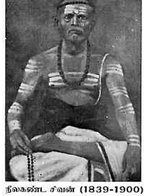
nIlakaNTa sivan (1839-1900) was christened “Subramanya” when he was born in   Vadiveshwaram village (Kanyakumari district).  He learnt and sang the songs of AruNAcala Kavi and MuttuttANDavar, as taught by his mother. He had no practical training in music. He assumed the name of “nIlakaNTa dAsan” after the presiding deity at Padmanabhapuram (nIlakaNTEshwarar), where he grew up. Others referred to him as “nIlakaNTa sivan” and that name stuck. Most people consider him holy enough to be considered another nAyanmAr.

He was a great devotee of Lord Siva although his family deity was Murugan. He wrote over 2000 songs on various Gods. His greatest contribution was “LalithA MahAtmiyam”. He composed in Thamizh and Sanskrit. Among them, ThirunIlakaNTa Dasakam, Anandavalli Satakam, and Anandavalli Ashtakam are noteworthy. His universal message was: knowledge, devotion, surrender to God, and adherence to spiritual, religious, and moral values.

Some of Sivan’s other songs which are rendered by musicians in concerts as regular fares are: ikaparam tarum (khamAs), navasiddhi peTRAlum (karaharapriyA), Ananda naTamADuvAr tillai (pUrvikalyANi), sivan varuvAr (darbAr), and SambhO mahAdEvA (bouLi).


Some audio/video clips
Listen to R Vedavalli here:  http://bit.ly/2finvB7
Listen to aruNA Sairam  here  
Listen to Ranjani Gayatri here
Listen to Savitha Narasimhan here
Listen to S Mahathi here   
Listen to T M Krishna here
Listen to Vijaya Siva here
Listen to Ramakrishnan Murthy here
Listen to Ashvin Bhogendra here
Listen to Renuka Arun here


References:


Saturday, July 2, 2016

Thamizh Songs in Carnatic Music—7 --enna tavam seydanai--- என்ன தவம் செய்தனை

 Thamizh Songs in Carnatic Music—7
enna tavam seydanai--- என்ன  தவம்  செய்தனை 


Composer:  PApanAsham Shivan 


What penance did you do?

Composition: enna tavam seidanai….
Composer:     pApanAsam sivan     
mudrA:          
(signature):    rAmadAsan
rAgam:           kApi (janyam of 22nd mELam, karaharapriyA)  காபி     
ArOhaNam:     SR2M1PN3S
AvarOhaNam: SN2D2N2PM1G2R2S
tALam:            Adi       ஆதி

பல்லவி:            என்ன  தவம்  செய்தனை  யசோதா
                            எங்கும்  நிறை  பரப்ரமம்  அம்மா  வென்றழைக்க      (என்ன)

அனுபல்லவி:  ஈரேழு  புவனங்கள்  படைத்தவனைக்  கையில்
                           ஏந்திச்  சீராட்டி  பாலூட்டித்  தாலாட்ட நீ             (என்ன)   
                                                        
 சரணம் 1:         பிரமனும்  இந்ரனும்  மனதில்  பொறாமை  கொள்ள
                            உரலில்  கட்டி வாய்பொத்திக் கெஞ்சவைத்தாய்  தாயே      (என்ன)
                                                                       
சரணம் 2:         சனகாதியர்  தவ  யோகம்  செய்து  வருந்தி
                           சாதித்ததை  புனித  மாதே  எளிதில்  பெற                            (என்ன)      

Lyrics in Roman script

Pallavi:           
enna  tavam  seidanai  yasOdA
engum  niRai  parabrahmam  ammA  venRazhaikka      (enna)

Anupallavi:      
IrEzhu  bhuvanangaL  paDaittavanaik  kaiyil                                                                 
Endic  cIrATTi  pAlUTTit  tAlATTa—nI                             (enna)                                                      

CaraNam 1:   
bhiramanum  indranum  manadil  poRAmai  koLLa
uralil   kaTTi   vAipottik  kenjavaittAi  tAyE                       (enna)
                                                                       
CaraNam 2:   
sanakAdiyar  tava  yOgam  seidu  varundi
sAdittadai  punida  mAdE  eLidil  peRa                            (enna)       


Source for lyrics:  Papanasam Sivan “kIrttana mAlai” published by his daughter
                               Dr. Rukmani Ramani.  Also see ref. 1

Meaning:

P:   Oh, YasOdA! What penance did you do to let the omnipresent Lord Almighty call you “ammA” (mother)?    
           
A:   You held the Lord, who created the fourteen worlds, in your arms, fondled Him, fed Him, and sang lullaby to let Him sleep.

C1:  You tied Him to the grain thresher (mortar) and made Him beg for your mercy with folded hands and closed mouth to the utter envy of Brahman and Indran.

C2:  You, holy woman, achieved with great ease what the sages like SanakA did through   painstaking efforts and intense penance (to have a vision of the lord)

 Some audio clips:
Another melodious rendition  here

Aruna Sairam,

To listen to Kadri Gopalnath on the saxophone,

Another vocal,

Another vocal,

General Comments:
This is a song in tribute to YasOdA, the foster-mother of Krishna glorifying her for her fortune in having to enjoy the pleasure of raising the baby Krishna as well as the power to punish the Lord when she so chose. It is simple in style but has a deep meaning. Usually the Lord does not have a mother. In this instance since Krishna was born to Devaki but transported to YasOdA to be raised by her, the implication is she must have earned so much merit to deserve such a boon as to be called “ammA” by the Lord Himself.

Several sages like SanakA, SanandanA, SanatkumArA, and SanatsujAtA had to undertake severe penance to have such privileges as to have a vision of the Lord while for YasOdA it is a cinch. On the one hand she gets to hold the Lord in her arms, attend to His daily needs such as feeding, clothing, and singing Him to sleep but correspondingly she also has the power to punish Him by tying Him to the grain thresher with a rope for such minor offenses as stealing butter. Her power to punish Krishna at will, induces envy in Brahman and Indran, who were humiliated** by Krishna even while He was growing up in Brindavanam.

This song just describes two instances: the fortune to have the exclusive privilege of caring for the baby Krishna and the authority to punish Krishna at will. Ordinary mortals, let alone sages, never get such a reward. Sivan wonders as to what YasOdA must have done to deserve such a good fortune.
----------------------------------------------------
** The humiliation of Brahman is connected with an episode of Brahman kidnapping the cowherds in Krishna’s clan with a subsequent apology from Brahman after knowing the greatness of Krishna who recreated the lost cowherds in His own form. Likewise, when Krishna ordered the residents of Brindavanam to ignore Indran and worship the Govardhana Mountain, Indran got angry and lashed out a rain storm on the community. Krishna lifted the mountain and held it as an umbrella under which all the residents took shelter. Finally Indran recognized Krishna’s power and apologized.
-----------------------------------------------------------
Some other songs of Sivan that are very popular are: kANa kaN kODi vENDum (kAmbhoji), kArtikekEya gAngEya gowri tanayA (tODi), kA vA vA (varALi), kaRpagamE (madyamAvati), mA ramaNan (hindOLam), pArvati nAyakanE (shanmukapriyA),  sAma gAna lOlanE (hindoLam), sivakAma sundari (mukhAri), singAra vElavan vandAn (Anandabhairavi), unaiyallAl gati yAr (kalyANi) and  tatvamaRiya tarama (rItigauLai).

Composer’s Bio:

Papanasam Sivan (1890-1973) was born as Ramaiah in POlagam (போலகம்) in Thanjavur district. He spent a lot of time with his older brother in Papanasam (near Kumbakonam). It was common in the early 20th century to confer the title of Sivan on men of God. Thus he acquired the name, “Papanasam Sivan”. He was influenced greatly by Neelakanta Sivan (another great composer) in his early life for a couple of years. He also drew inspiration from Gopalakrishna Bharathi. He did not have a traditional musical curriculum but learnt music occasionally from several musicians. Konerirajapuram Vaidyanatha Iyer served as his mentor and sponsor in his adult life.

He was committed to Thamizh, Thamizh music, and the freedom movement. He composed around 2500 songs (mainly devotional, and occasionally social, and national themes) and performed in several theatrical productions. He was a teacher at the famed Kalakshetra in Chennai during 1934-39. He composed classical music for several movies and also acted in four movies. He composed mainly in Thamizh but also penned a few compositions in Sanskrit, and Telugu. He used the signature “Ramadasan”.  But many of his compositions did not contain his signature, including the song discussed here.

He was awarded “Sangeetha Kalanidhi” by the Music Academy in Chennai in 1971.During his lifetime he published around 400 of his songs which are  currently out of  print. Currently, his daughter, Dr. Rukmani Ramani is (re)publishing many of his songs with monetary help from philanthropists, music organizations, and foundations.