Showing posts with label கங்கை. Show all posts

Saturday, November 12, 2016

Thamizh Songs in Carnatic Music—29---ஆடிக்கொண்டார் அந்த வேடிக்கை--ADikkoNDAr anda vEDikkai


Thamizh Songs in Carnatic Music—29

ஆடிக்கொண்டார் அந்த வேடிக்கை--ADikkoNDAr anda vEDikkai

Composer: Muttut tANDavar

rAgam: mAyAmALavagauLai    tALam: Adi


A thousand eyes to witness the delightful dance …..


Composition:  ADikkoNDAr anda vEDikkai…..
Composer:     muttut tANDavar
mudrA:           none
(signature):   
rAgam:  mAyAmALava gauLai (15th mELam) or mOhanam ( janyam of                                                   harikAmbhOji, 28th mELam) 
tALam:           Adi, Eka
ArOhaNam:   SR1G3M1PD1N3S  (SR2G3PD2 S for mOhanam)
avarOhaNam: SN3D1PM1G3R1S  (SD2PG3R2S for mOhanam)


பல்லவி:            
ஆடிக்கொண்டார் அந்த வேடிக்கைக் காணக்
        கண் ஆயிரம் வேண்டாமோ

அனுபல்லவி:   
 நாடித் துதிப்பவர் பங்கில் உறைபவர் நம்பர்  
        திருச்செம்பொன்  அம்பலவாணர்                                    (ஆடிக்கொண்டார்)

சரணம்1:    
பங்கய சிலம்பைந்தாடப் பாதச்
           சதங்கைகள் கிண்கிண்ணென்றாட
பொங்கமுடனே உரித்து உடுத்த புலித்தோல் அசைந்தாட
செங்கையில் ஏந்திய மான் மழுவாட
              செம்பொற்க்கழற் கண் முயலகனாட
 கங்கை இளம் பிறை செஞ்சடையாடக்
               கனக சபை தனிலே                                      (ஆடிக்கொண்டார்)

சரணம்2:     
ஆர நவமணி மாலைகளாட ஆடும் அரவம் படம் விரித்தாட
சீரணிக் கொன்றை மலர்த் தொடையாடச் சிதம்பரத்தேர் ஆட
பேரணி வேதியர் தில்லை மூவாயிரம் பேர்களும் பூஜித்துக் கொண்டு நின்றாட
காரணி  காளி எதிர்த்து   நின்றாடக் கனக சபை தனிலே                                                                                                                                                 (ஆடிக்கொண்டார்)

சரணம்3:    
ந்ரித்த கணபதி வேலர் நின்றாட நின்றயன் மாலுடன் இந்திரன் ஆட
முப்பத்து முக்கோடி தேவருடனே முனிவரும் நின்றாட
மெய்ப்பதி மேவும் பதஞ்சலி ஆட வ்யாக்ர பாதரும் நந்தியுமாட
ஒப்பற்ற சிவகாமி அம்மையும் கூடவே நின்றாட      (ஆடிக்கொண்டார்

Lyrcis in Roman script

Pallavi:            ADikkoNDAr anda vEDikkaik kANak kaN Ayiram vENDAmO

Anupallavi:    nADit tudippavar pangil uRaibavar nambar
                        tiruccempon  ambalavANar                                    (ADikkoNDAr)

CaraNam1:     pangaya silambaindADap pAdac
                              cadangaigaL kiNkiNNenRADa
                        pongamuDanE urittu uDutta pulittOl asaindADa
                        sengaiyil Endiya mAn mazhuvADa
                               sempoRkkazhaRk kaN muyalaganADa
                        gangai iLam piRai senjcaDaiyADak
                               kanaka sabhai tanilE                                      (ADikkoNDAr)

CaraNam2:     Ara navamaNi mAlaigaLADa ADum aravam paDam virittADa
                        sIraNik konRai malart toDaiyADac cidambarattEr ADa
                        pEraNi vEdiyar tillai mUvAyiram pergaLum pUjittuk koNDu ninRADa
             kAraNi  kALi etirttu ninRAdak kanaka sabhai tanilE                                                                                                                                                 (ADikkoNDAr)

CaraNam3:     nritta gaNapati vElar ninRADa ninRayan mAluDan indran ADa
                        muppattu mukkOTi dEvaruDanE munivarum ninRADa
                        meippati mEvum patanjali ADa vyAgra pAdarum nandiyumADa
                        oppaTRa sivakAmiammaiyum kUDavE ninRADa            (ADikkoNDAr)                            
                                                                                                                                   
Lyrics:           
The lyrics have been assembled from http://www.karnatik.com/c2440.shtml  and  Amutham CD (booklet) WS006. We tried to rectify some transcriptional errors in the lyrics. In the absence of authentic text available to us, this version may still contain some errors. The assistance of Rajani Shankar of Malaysia in clarifying certain terms is appreciated.


Meaning:

Pallavi:           He is dancing delightfully.  Don’t we need a thousand                                               
                        eyes to witness such a spectacle?

Anupallavi:    He supports those who worship Him. He is the Lord of the                                                                       sacred golden hall (in Cidambaram).

CaraNam1:     The five anklets are shaking and the string of bells (cadangai) makes a                                                    tinkling sound. The tiger hide stripped and worn around His waist is                          dancing! The   deer and the axe borne in the hands are dancing! The                                                      demon (muyalagan) is also dancing at His golden feet! The maiden GangA and the                                crescent moon on the locks of hair are also dancing when the Lord dances in  the                                  golden hall.

CaraNam2:     The plentiful nine-stone (navaratnam) necklaces are dancing! The snake                          around His neck is spreading its hood and dancing! The resplendent                                                        flower (konRai) garland hanging down is also dancing! The temple chariot is dancing!                            kALi is also dancing! The three thousand  priests of Cidambaram pray and dance!                                 Thus the Lord dances at the golden hall!

CaraNam3:     Ganapati and Murugan are dancing! Brahma (ayan), Vishnu (mAl), and                          Indran (chief of staff in the celestial world) dance! With innumerable                                                        celestials, the sages also dance! The truly devoted Patanjali dances! The                                                sage vyAgrapAdA and the sacred bull (nandi) also dance! The                                                                incomparable dEvi Sivakami dances together with Lord Siva.
                       
General Comments:
This song delves deep into the details of the cosmic dance of Lord Siva in its entire splendor. The composer goes into rapture at the sight of the cosmic dance. To him every thing around Nataraja dances in unison with Him.  The composer imagines that even the inanimate objects such as the anklets, the tiger hide, the axe, the necklaces, and  the flower garland, in addition to the snake, the priests, the celestials and the Lord’s consort  dance as though they are inseparable.

For a person who did not have any training in music, to write such compositions (which are tuned to beautiful rAgam and rhythm) is truly amazing.  It is common knowledge that the cosmic dance of Nataraja at Cidambaram has grabbed the attention of several composers, both ancient and modern. The mythological references to Patanjali and VyAgrapAda indicate that it is truly a one-of-a-kind event in religious folklore.

Once again, the song has references to various episodes of gallantry of Lord Siva and the celestial activities. It is a theme handled by MarimuttA PiLLai too.

Composer’s Bio:
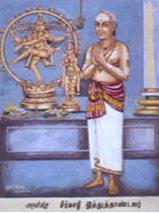
Muththuth Thandavar (1560-1640??) was born in SIrkhazhi near Cidambaram in a family of instrumental musicians who served the temples.  They were known as isai vELALar---those who cultivate music. The child was named tANDavan after the deity at Cidambaram.

As a youngster, tANDavan suffered an incurable wasting disease which caused havoc on his health and appearance. He was not able to follow the family profession on account of this debilitating condition. He was also shunned by everybody. He used to visit a temple maid (dEvadAsi?), SivabhAgyam, to hear her sing and dance. This isolated him and aggravated his already pitiful condition and he was left to fend for himself.

It appears that he got inspiration by listening to the devotional songs sung by SivabhAgyam.  . His foray into composing began as an accident. One day he was locked up in the SIrkhazhi temple room containing the vehicles used to carry the gods on festive days. He cried but to no avail. After a while the daughter of the temple priest appeared before him with a bowl of food. She told him to go to Cidambaram and sing a song everyday in praise of the Lord. While tANDavan protested that he knew nothing about singing or composing, the little girl asked him to use the words of the devotees who enter the temple. It was all the doing of dEvi (goddess). The next morning the “ugly” tANDavan looked radiant, thereby earning the nickname “muttut tANDavan”.

There was no looking back for him ever. He went to Cidambaram. On the first day he heard some words “bhoolOka kailAya giri…”. He used those words and sang right off at the sanctum. His illness was cured. He continued the daily ritual of singing in the temple grabbing the stray words of the devotees.  After a while he didn’t need the lead words.  He kept on composing and singing. His life was one of miracle on a personal level and a gift to humanity in the form of devotional songs. He was a pioneer in composing padams. teruvil vArAnO (khamAs rAgam) is a classic and  a delight for dancers and audience alike.

Muththuth Thandavar (MT), Arunacala Kavi (AK), and Marimutta Pillai (MMP) are celebrated  as members of the Thamizh trinity (Thamizh mUvar) in recognition of their contributions to Thamizh music.
            
Very few of MT’s compositions have survived the test of time.  TiruppAmburam SwAminatha PiLLai collected sixty of them and tuned them to different rAgams under the sponsorship of ANNAmalai University. Twenty five padams of MT are also available. Some of his compositions that are sung in music concerts are: arumarundonRu tani marundidu (mOhanam or kAmbhOji), pEsAdE nenjamE (tODi), kANAmal vINilE (dhanyAsi or kAmbhOji, or nIlAmbari), teruvil vArAnO (khamAs), unai nambinEn ayyA (kIravANi),  IsanE kOTi sUrya prakAsanE (naLinakAnti), darisittaLavil (latAngi), sEvikka vENDumayyA (AndOLikA), innum oru taram (simmEndra madyamam), and ambara cidambaram, & innum oru stalam (suraTi).

Some audio and video links

Listen to Sudha Ragunathan here
Charulata Mani sings here 

Listen to Vidya Kalyanaramamn here

Listen to Unnikrishnan here

Listen/view K Bharath Sundar here

For a dance by young dancers here

SEshampaTTi Sivalingam on nAdaswaram here https://www.mediafire.com/?ho9gcpebw2pm14p


Reference:


Wednesday, November 2, 2016

Thamizh Songs in Carnatic Music—28-- KAlait tUkki----காலைத் தூக்கி

Thamizh Songs in Carnatic Music—28
KAlait  tUkki----காலைத்  தூக்கி 

                        Composer: MArimuttA PiLLai  (மாரிமுத்தாபிள்ளை)                                                               
  rAgam: Yadukula KAmbhOji (யதுகுல காம்போதி)   tALam: Adi (ஆதி)


28 harikAmbhOji janyam
ArOhaNam: S R2 M1 P D2 S
avarOhaNam: S N2 D2 P M1 G3 R2 S

பல்லவி
காலைத் தூக்கி நின்று ஆடும் தெய்வமே என்னைக்                                                                        
கை தூக்கியாள் தெய்வமே                                                                
அனுபல்லவி
வேலைத்  தூக்கும் பிள்ளை தனைப்  பெற்ற தெய்வமே                                
மின்னும் புகழ்சேர் தில்லை பொன்னம்பலத்தில் ஒரு                    (காலை)
சரணம்1
செங்கையில் மான் தூக்கி சிவந்த மழுவும் தூக்கி                                                        
அங்கத்தில் ஒரு பெண்ணை அனுதினமும் தூக்கி
கங்கையைத் திங்களை தரித்த சடைமேல் தூக்கி                                                              
இங்கும் அங்குமாய்த் தேடி இருவர் கண்டறியாத                          (காலை)
சரணம்2
நந்தி மத்தளம் தூக்க நாரதர் யாழ் தூக்க
தோம் தோம் என்றயன் தாளம் சுருதியோடு தூக்க
சிந்தை மகிழ்ந்து வானோர் சென்னி மேல் கரம் தூக்க
முந்தும் வலியுடைய முயலகன் உன்னைத் தூக்க                      (காலை)

Lyrics in Roman script

pallavi
kAlait tUkki ninRu ADum deyvamE ennaik                                                              
kai tUkkiyAL deyvamE                                               (kAlai)

anupallavi
vElait  tUkkum piLLai tanaip  peTra deyvamE                                                     
minnum pugazhsEr tillai ponnambalattil oru                 (kAlai)

caraNam1
sengaiyil mAn tUkki sivanda mazhuvum tUkki                                                       
angattil oru peNNai anudinamum tUkki
gangaiyait tingaLai kaditta saDaimEl tUkki                                                               ingum angumAit tEDi iruvar kaNDariyAda                    (kAlai)

CaraNam2
nandi mattaLam tUkka nAradar yAzh tUkka                                                             
tOm tOm enRayan tALam surutiyODu tUkka                                                               sindai magizhndu vAnOr senni mel karam tUkka                                                      mundum valiyuDaiya muyalagan unnait tUkka         (kAlai)

Meaning:
Pallavi: Oh lord who raises one leg and dances, please offer your hand, and lift me (help me) up with your grace.

Anupallavi: You begot a son who carries a spear.  You lift one leg and dance in the famous and glorious golden hall of the town of tillai (Cidambaram).

CaraNam1: You hold a deer in one hand, and a red axe in another. You share your body with a woman (PArvati/umA) always. On your matted locks you carry the (river) GangA and the crescent moon. Two (Vishnu and Brahma) who looked for your head and feet could not find them.

CaraNam2: The bull (nandi) beats the drum. NAradar plays the yAzh (lyre). Brahma (ayan) keeps the beat (tOm tOm) and the sruti (delicate sound). All the celestials are happy and lift their hands over their heads in veneration. The demon muyalagan lifts you from under your (right) foot.

Commentary: The composer showers his praise here by pointing out all the glorious aspects of the dance using the simple word “tUkki” (which means “lift”) to indicate the glorious deeds of lord Shiva---warding off the weapons (axe, deer, flame etc.,) hurled at him by the dArukA vanam (where he wandered as a mendicant) sages, as well as offering the left side of his body to his consort PArvati (angattil oru peNNai tUkki). The episode of Vishnu and Brahma trying to find the feet and head, respectively, of lord Shiva is mentioned in a veiled manner (iruvar kaNDaRiyAda). Likewise the participants in the orchestra for the dance are said to glorify the dance by saying “tUkka” repeatedly to indicate whether playing the drum, the lyre, or keeping the time beat. Finally the sages of dArukA vanam hurled a demon (muyalagan) at lord shiva in an attempt to dispense with him. But the lord captured the demon and stomped on him. That is mentioned cryptically and satirically as “muyalagan unnait tUkka”---as though the demon is lifting the lord from below. Nice composition with a flourish in the style of writing.

Some audio/video links:

For an extended version click here


Listen to BhUshaNi KalyANarAman here https://www.mediafire.com/?rx4t85fss6frbr4


Composer’s Bio:
MArimuttA PiLLai (1712-1787) was born in ThillaiviDangan near Cidambaram, also known as tillai. tillai was named after a forest of trees of that species, known by the botanical name Excoecaria agallocha, which grows wild in the marshy tidal shores.

SEkkizhzAr, the medieval Thamizh poet wrote his classic work Periya Puranam in Cidambaram. He sang the glory of tillai thus:

ஆதியாய் நடுவும் ஆகி அளவிலா அளவும் ஆகி 
சோதியாய் உணர்வும் ஆகி  தோன்றிய பொருளும் ஆகி 
பேதியா ஏகமாகிப் பெண்ணுமாய் ஆணும் ஆகி 
போதியா  நிற்கும் தில்லைப்  பொதுநடம் போற்றி போற்றி 

            AdiyAi naDuvum Aki aLavilA aLavum Akic
            cOdiyAi uNarvum Akit tOnRiya poruLum Aki
            bEdiyA EkamAkip peNNumAi ANum Aki
            bOdiyA niRkum tillaip podunaTam pOTRi pOTRi

SEkkizhAr talks about Lord Shiva who manifests as the beginning, the immeasurable, the effulgence, the meaning of the inscrutable, the division as well as  the union of the male and the female, and the universal knowledge that is represented by the cosmic dance---all represented by the cosmic dance performed only at tillai.

MMP, who is inseparable from tillai, was born in a devout shaivaite family. He was a great Thamizh composer well-known for writing prabhandham (a musical composition).  His very first composition was the famous “puliyUr veNbA” in praise of the city of Cidambaram.  Only 25 of his songs on Lord Nataraja are now available. Many of the themes of his songs are connected with Lord Shiva and more particularly Nataraja of Cidambaram.

MMP,   Arunacala Kavi, and Muttut tANDavar are hailed as members of the Thamizh trinity (Thamizh mUvar) in recognition of their contributions to Thamizh music.
Not very many compositions of MMP have survived the test of time. Some of his compositions that are sung in music concerts are: ennEramum oru kAlait (tODi), orukAl sivacidambaram (Arabhi), and Edukkittanai mODi tAn (suraTi).